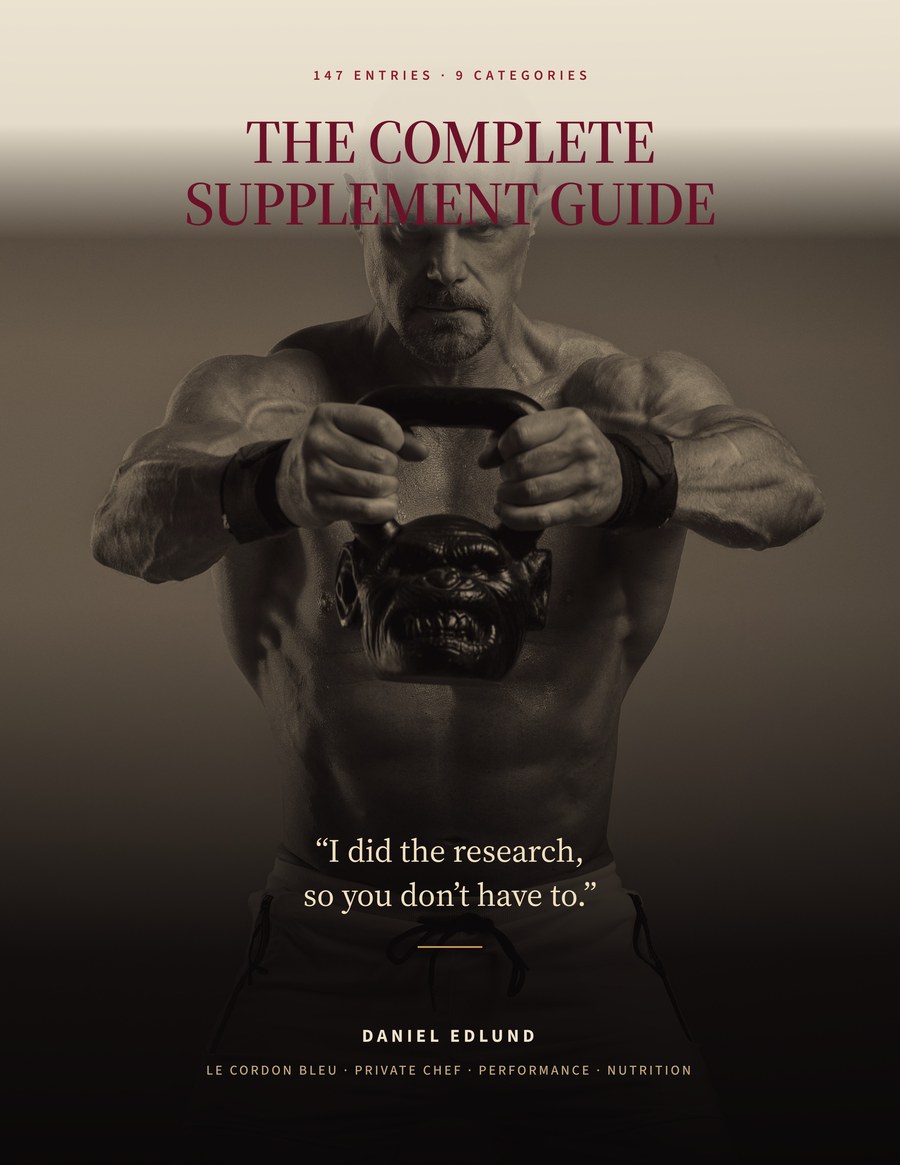
Free entry from The Complete Supplement Guide
GABA (Gamma-Aminobutyric Acid)
Graded Emerging · Sleep, Stress & Cortisol Management · free to read
This is one of the most genuinely contested mechanisms in this entire guide.
The dose range, the form that actually absorbs, the purity red flags and what not to stack it with are in the guide.
Get The Complete Supplement Guide →Last reviewed September 2026
The verdict
Is GABA worth taking?
This is one of the most genuinely contested mechanisms in this entire guide. GABA is the brain’s primary calming neurotransmitter, but oral GABA has historically been thought unable to meaningfully cross the blood-brain barrier, raising the question of how, or whether, oral supplementation could work at all. Newer 2024 and 2025 research proposes a plausible alternative explanation: GABA may act through the gut-vagus nerve pathway and the gut microbiome rather than by directly reaching brain tissue. Some small human trials do show modest calming and sleep benefits, but the mechanism remains unresolved and large, well-controlled human trials are still lacking. Treat this as a promising but unproven compound.
What it does
What GABA does in the body
Marketed for relaxation, stress reduction, and sleep support. GABA is the primary inhibitory neurotransmitter in the central nervous system, responsible for calming neuronal activity. The central scientific question with oral GABA supplementation is not whether GABA itself is calming, that is well established, it is whether an oral supplement can meaningfully influence brain GABA activity at all, given the long-standing understanding that GABA does not readily cross the blood-brain barrier.
The evidence
What the research actually shows
Emerging and genuinely contested. The blood-brain barrier question remains scientifically unresolved as of current research, with some animal studies suggesting limited passage via specific transporters and most experts concluding minimal to no direct penetration. A more recent and increasingly credible alternative hypothesis proposes that oral GABA acts via vagal afferent nerve signaling and the gut microbiome, a peripheral-to-central pathway that would not require crossing the blood-brain barrier at all. Small human trials, including a 2024 study in sedentary overweight women, report modest benefits to heart-rate variability, sleep efficiency, and mood, but the evidence base remains thin relative to the compound’s popularity.
Current evidence synthesis: Effects of Oral Gamma-Aminobutyric Acid (GABA) Administration on Stress and Sleep in Humans: a systematic review (2020).
Food first
Getting GABA from food
Fermented foods including kimchi, miso, and tempeh contain dietary GABA produced by fermentation bacteria, and certain probiotic strains including specific Lactobacillus and Bifidobacterium species are themselves GABA producers in the gut, which is mechanistically interesting given the gut-vagus hypothesis discussed above.
What the guide adds
The part that is not on this page
Everything above is the assessment. What the guide adds for GABA is the protocol:
- Optimal Form
- Dose Range
- Bioavailability
- Purity Red Flags
- Stack With / Avoid
147 entries across nine categories, every one graded against the clinical literature the same way.
About the author
Who graded this
Daniel Edlund is a Le Cordon Bleu-trained private chef in Los Angeles, a certified personal trainer and strength coach, and an internationally licensed massage therapist. Thirty years of strength training and fifteen years cooking in private estate kitchens. He is the author of The Complete Supplement Guide, which grades 147 entries against the clinical literature, and of The EASY Way to Organic Cooking, first published in 2013.
This page is information, not medical advice. Supplements interact with prescription medication and with each other, and the right answer depends on your own bloodwork and history. Talk to your doctor before starting anything, particularly if you are pregnant, nursing, managing a health condition, or already taking medication.
Also in Sleep, Stress & Cortisol Management
Related entries
- Reishi Mushroom — Emerging evidence
- Apigenin — Emerging evidence
- L-Theanine — Strong evidence
- Saffron Extract — Moderate evidence
- Melatonin — Strong evidence
- CBD — Moderate evidence