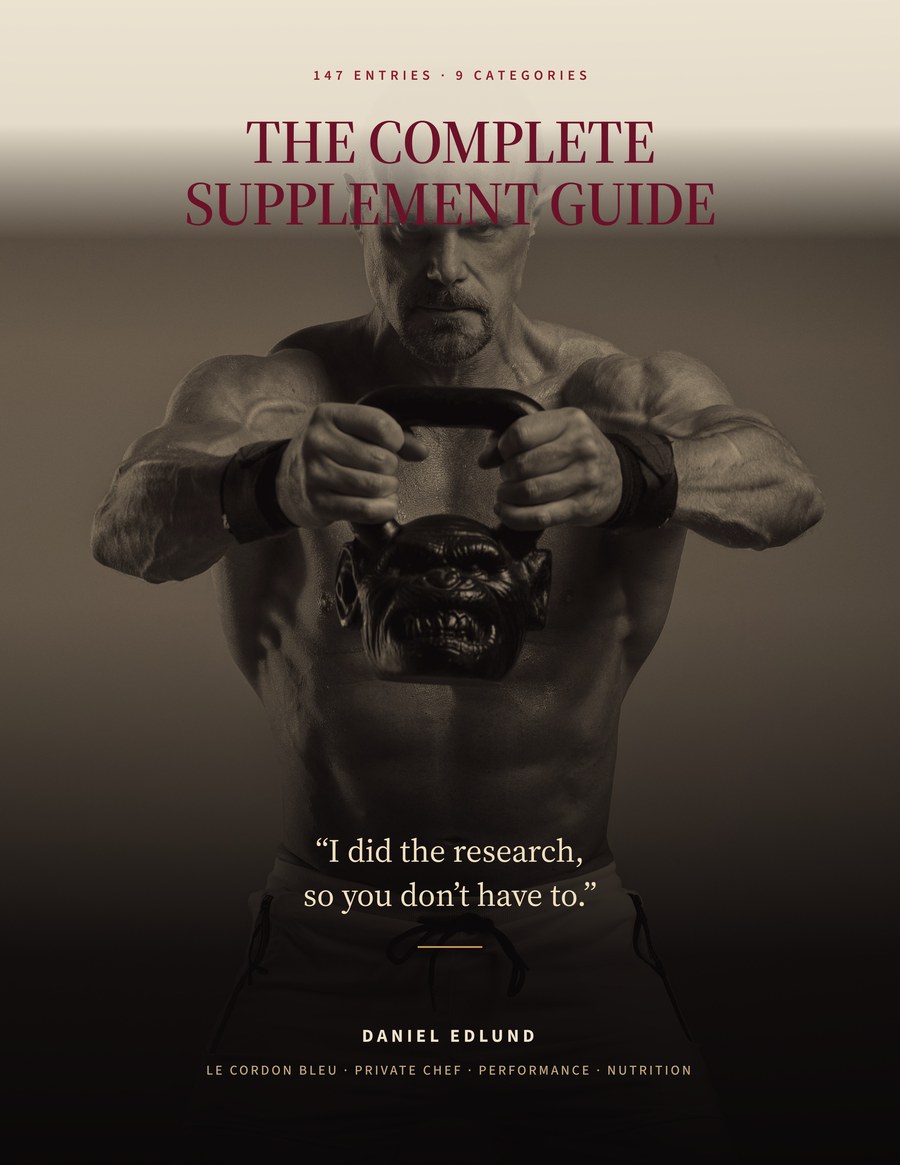
Free entry from The Complete Supplement Guide
NAC (N-Acetylcysteine)
Graded Moderate · Recovery & Joint Health · free to read
NAC is the most reliable way to raise intracellular glutathione, the body’s master antioxidant, and has a uniquely broad evidence base spanning recovery, liver protection, respiratory health, and mental health support.
The form that actually absorbs, the purity red flags and what not to stack it with are in the guide.
Get The Complete Supplement Guide →Last reviewed September 2026
The verdict
Is NAC worth taking?
NAC is the most reliable way to raise intracellular glutathione, the body’s master antioxidant, and has a uniquely broad evidence base spanning recovery, liver protection, respiratory health, and mental health support. A 2024 meta-analysis across 20 trials confirmed it significantly reduces muscle soreness and lactate after exercise. Take 600 to 1,200 mg daily away from training sessions. Avoid high doses immediately post-workout as excess antioxidant activity may blunt the adaptive hormetic response. The full glutathione entry appears in Category 09.
What it does
What NAC does in the body
Glutathione replenishment, oxidative stress reduction, exercise recovery, liver protection, respiratory health, and immune support. NAC is a sulfur-containing amino acid derivative and the rate-limiting precursor to glutathione, the primary intracellular antioxidant system. By providing cysteine, the scarcest of the three glutathione precursor amino acids, NAC reliably raises glutathione levels across tissues including liver, lung, muscle, and brain. A 2024 meta-analysis across 20 trials found NAC supplementation significantly reduced muscle soreness and lactate concentrations after physical exertion, with most trials also reporting antioxidant capacity improvements.
The evidence
What the research actually shows
Moderate for recovery applications. Strong for liver protection and acetaminophen overdose treatment where NAC is the established medical antidote. The 2024 meta-analysis confirming muscle soreness reduction and lactate clearance supports its recovery application. Evidence for muscle damage marker reduction including CK and IL-6 is inconsistent across trials. The breadth of its evidence base across multiple systems is notable and the timing caveat around post-workout use is an important practical nuance.
Food first
Getting NAC from food
Cysteine-rich foods including poultry, eggs, beef, dairy, and sunflower seeds support endogenous glutathione production. Sulfur-rich foods including garlic, onions, and cruciferous vegetables contribute to glutathione synthesis pathways. The targeted pharmacological action of NAC in raising intracellular glutathione is not replicated by food sources at practical dietary amounts.
What the guide adds
The part that is not on this page
Everything above is the assessment. What the guide adds for NAC is the protocol:
- Optimal Form
- Bioavailability
- Purity Red Flags
- Stack With / Avoid
147 entries across nine categories, every one graded against the clinical literature the same way.
About the author
Who graded this
Daniel Edlund is a Le Cordon Bleu-trained private chef in Los Angeles, a certified personal trainer and strength coach, and an internationally licensed massage therapist. Thirty years of strength training and fifteen years cooking in private estate kitchens. He is the author of The Complete Supplement Guide, which grades 147 entries against the clinical literature, and of The EASY Way to Organic Cooking, first published in 2013.
This page is information, not medical advice. Supplements interact with prescription medication and with each other, and the right answer depends on your own bloodwork and history. Talk to your doctor before starting anything, particularly if you are pregnant, nursing, managing a health condition, or already taking medication.
Also in Recovery & Joint Health
Related entries
- Boswellia Serrata — Moderate evidence
- Hyaluronic Acid — Moderate evidence
- Ashwagandha — Moderate evidence
- Chondroitin Sulfate — Moderate evidence
- Astaxanthin — Moderate evidence
- Glucosamine Sulfate — Moderate evidence
Grades by category → · The Overhyped Ten, the ten that failed, free →