Free entry from The Complete Supplement Guide
Glucosamine Sulfate
Graded Moderate · Recovery & Joint Health · free to read
Glucosamine sulfate is the form with the most clinical trial support for joint pain and osteoarthritis.
The dose range, the form that actually absorbs, the purity red flags and what not to stack it with are in the guide.
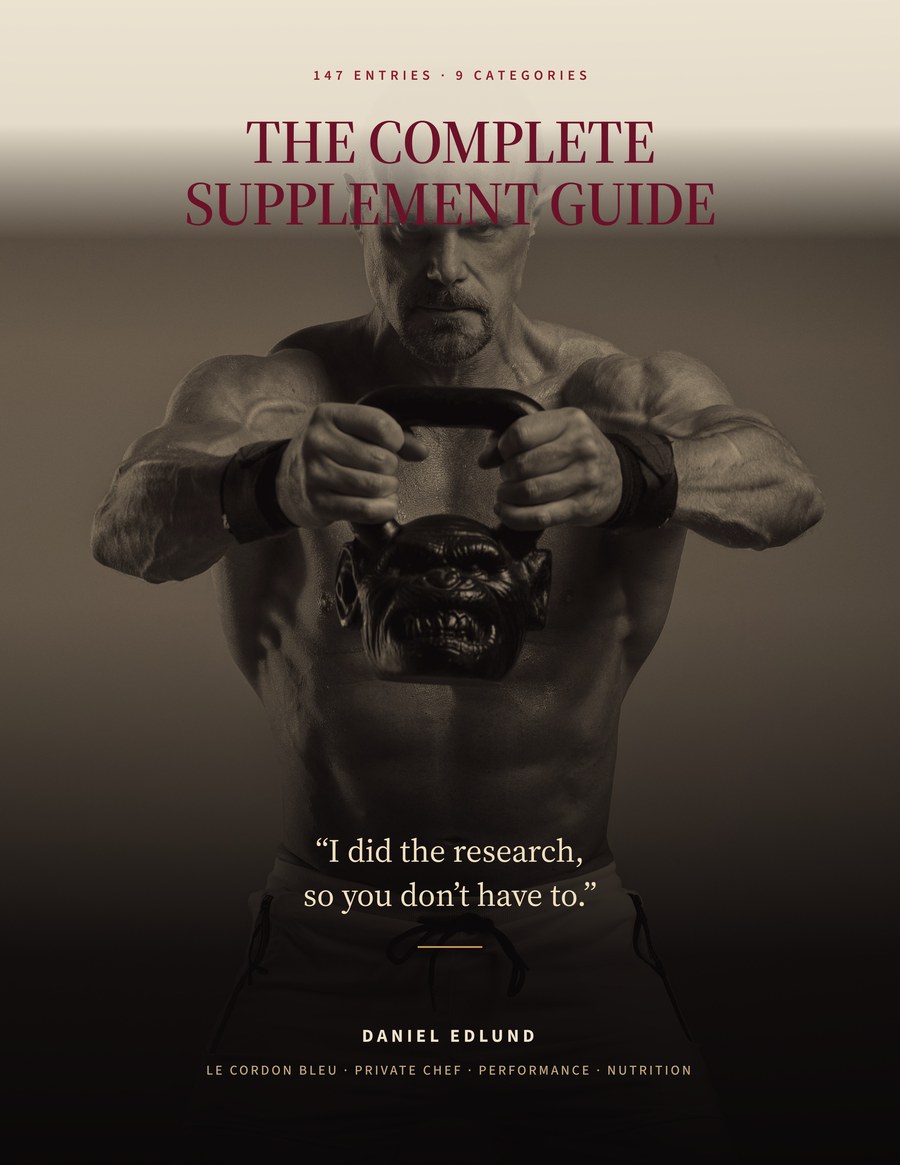
Get The Complete Supplement Guide →Last reviewed September 2026
The verdict
Is Glucosamine Sulfate worth taking?
Glucosamine sulfate is the form with the most clinical trial support for joint pain and osteoarthritis. Glucosamine HCl is cheaper but less studied. Effects build over 8 to 12 weeks so give it time before drawing conclusions. A 2025 systematic review covering over 90% of efficacy studies found positive outcomes with minimal adverse effects. Combine with chondroitin sulfate and MSM for the most comprehensive joint support stack. Shellfish-derived is the most common source; corn-fermented is the alternative for shellfish-allergic individuals.
What it does
What Glucosamine Sulfate does in the body
Joint pain reduction, cartilage protection, synovial fluid support, and osteoarthritis symptom management. Glucosamine is a naturally occurring amino sugar that serves as a structural precursor to glycosaminoglycans, the long-chain carbohydrates that form the backbone of cartilage and synovial fluid. It stimulates the production of hyaluronic acid within the synovium, enhancing joint lubrication, and inhibits catabolic enzymes including matrix metalloproteinases that contribute to cartilage breakdown. Relevant not only for existing joint pain but as a protective agent for high-impact athletes seeking to preserve long-term joint health.
The evidence
What the research actually shows
Moderate. A June 2025 systematic review covering studies from 1990 to 2024 found over 90% of efficacy studies reported positive outcomes for joint pain and function, with most safety studies indicating minimal or no adverse effects. A 2024 network meta-analysis found glucosamine combination therapies meaningfully superior to placebo for knee osteoarthritis pain. Evidence is strongest for symptomatic relief rather than structural modification of cartilage.
Food first
Getting Glucosamine Sulfate from food
Glucosamine does not occur in meaningful amounts in common foods. Animal cartilage in bone broth, slow- cooked joints, and chicken feet provides the closest food-form equivalent through glycosaminoglycan content, but not glucosamine directly. Supplementation is the practical route for therapeutic doses.
What the guide adds
The part that is not on this page
Everything above is the assessment. What the guide adds for Glucosamine Sulfate is the protocol:
- Optimal Form
- Dose Range
- Bioavailability
- Purity Red Flags
- Stack With / Avoid
147 entries across nine categories, every one graded against the clinical literature the same way.
About the author
Who graded this
Daniel Edlund is a Le Cordon Bleu-trained private chef in Los Angeles, a certified personal trainer and strength coach, and an internationally licensed massage therapist. Thirty years of strength training and fifteen years cooking in private estate kitchens. He is the author of The Complete Supplement Guide, which grades 147 entries against the clinical literature, and of The EASY Way to Organic Cooking, first published in 2013.
This page is information, not medical advice. Supplements interact with prescription medication and with each other, and the right answer depends on your own bloodwork and history. Talk to your doctor before starting anything, particularly if you are pregnant, nursing, managing a health condition, or already taking medication.
Also in Recovery & Joint Health
Related entries
- Chondroitin Sulfate — Moderate evidence
- Bromelain / Proteolytic Enzymes — Moderate evidence
- Hyaluronic Acid — Moderate evidence
- MSM — Moderate evidence
- NAC — Moderate evidence
- L-Glutamine — Moderate evidence
- Collagen Peptides — Strong evidence
- Boswellia Serrata — Moderate evidence
- Curcumin / Turmeric — Moderate evidence
Grades by category → · The Overhyped Ten, the ten that failed, free →