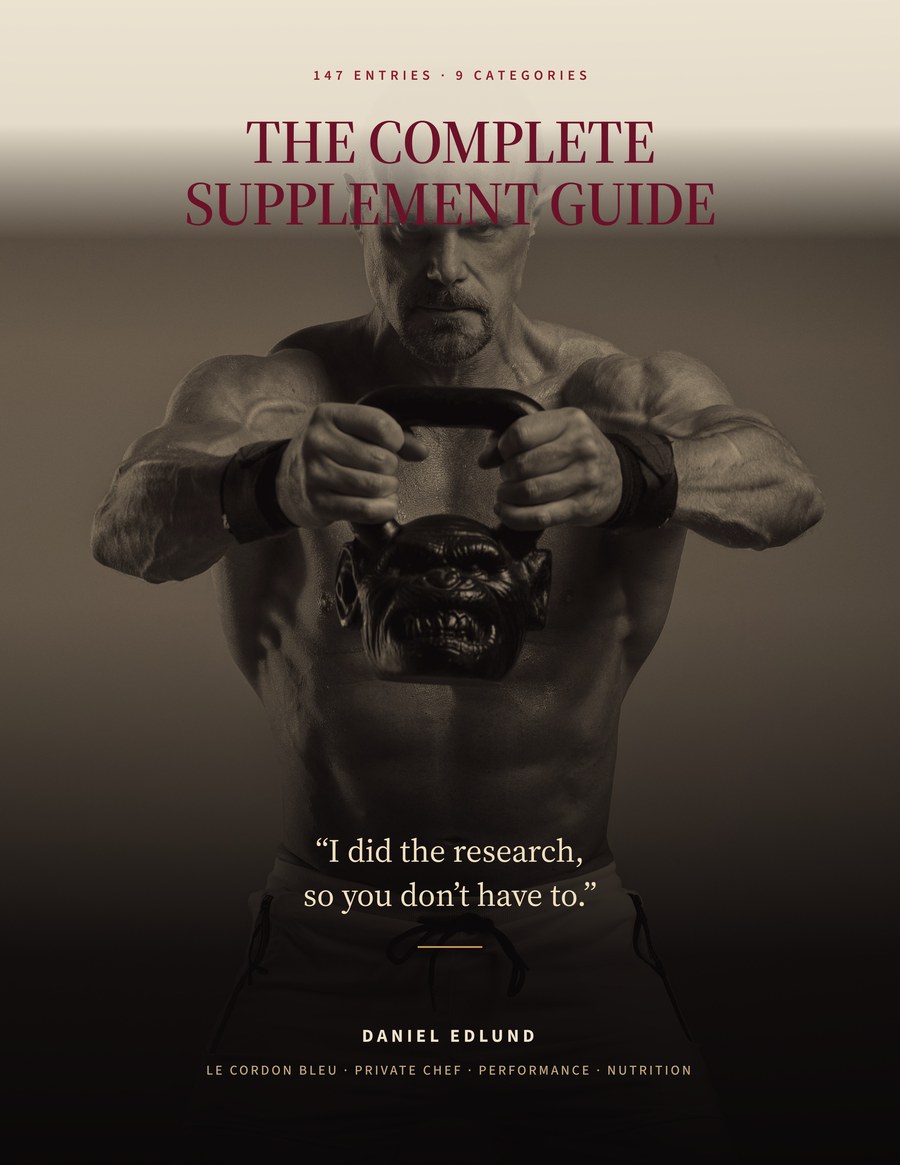
Free entry from The Complete Supplement Guide
Collagen Peptides (Type I / Type II / UC-II)
Graded Strong · Recovery & Joint Health · free to read
Collagen peptides are not the same as protein powder and should not be treated as one.
The form that actually absorbs, the purity red flags and what not to stack it with are in the guide.
Get The Complete Supplement Guide →Last reviewed September 2026
The verdict
Is Collagen Peptides worth taking?
Collagen peptides are not the same as protein powder and should not be treated as one. They are structurally specific: Type I for skin, tendons, ligaments, and bones; Type II and UC-II for joint cartilage. Take 10 to 15 g hydrolyzed collagen with 500 mg vitamin C 30 to 60 minutes before training for peak collagen synthesis in tendons and ligaments. UC-II at just 40 mg outperformed glucosamine and chondroitin combined in a head-to-head trial for joint pain and function over six months.
What it does
What Collagen Peptides does in the body
Tendon and ligament repair, joint cartilage support, skin elasticity, bone strength, and exercise-induced connective tissue recovery. Collagen is the most abundant protein in the human body, comprising the structural matrix of tendons, ligaments, cartilage, bone, skin, and gut lining. Hydrolyzed collagen peptides are pre-digested into short amino acid chains that absorb into the bloodstream as collagen-specific dipeptides and tripeptides, notably hydroxyproline-glycine and proline- hydroxyproline, which directly stimulate collagen synthesis in fibroblasts and chondrocytes. This is fundamentally different from whey or plant protein. The specific peptide fragments signal the body to produce new collagen in the very tissues that supplementation is intended to support.
The evidence
What the research actually shows
Strong for tendon, ligament, and skin applications. A landmark study demonstrated that 15 g of gelatin with vitamin C taken one hour before exercise doubled collagen synthesis markers in tendons. Multiple trials confirm hydrolyzed collagen reduces joint pain, improves skin elasticity and hydration, and supports recovery from connective tissue injuries. UC-II undenatured Type II collagen at 40 mg daily outperformed glucosamine plus chondroitin at standard doses in a six-month randomized trial for knee osteoarthritis pain and function.
Current evidence synthesis: Collagen Supplementation on Tendon-Related Structural and Performance Outcomes: A Systematic Review (2026).
Food first
Getting Collagen Peptides from food
Bone broth, gelatin, slow-cooked meats on the bone, chicken feet, pig’s trotters, and oxtail are the richest food sources. A properly made bone broth simmered for 12 or more hours delivers meaningful collagen peptide content. The therapeutic doses used in trials, 10 to 15 g, are achievable from a large mug of concentrated bone broth daily, particularly if reduced.
From the kitchen
A chef's note on Collagen Peptides
Whole-animal cooking is central to how I approach nutrition for clients. The cuts that contain the most collagen, oxtail, short rib on the bone, chicken thighs with skin, pork shoulder, are also among the most flavorful and satisfying. The performance nutrition world over-indexes on lean protein while leaving the most connective-tissue-supportive parts of the animal unused. A slow braise or a long-simmered stock is the most delicious collagen delivery vehicle available.
What the guide adds
The part that is not on this page
Everything above is the assessment. What the guide adds for Collagen Peptides is the protocol:
- Optimal Form
- Bioavailability
- Purity Red Flags
- Stack With / Avoid
147 entries across nine categories, every one graded against the clinical literature the same way.
About the author
Who graded this
Daniel Edlund is a Le Cordon Bleu-trained private chef in Los Angeles, a certified personal trainer and strength coach, and an internationally licensed massage therapist. Thirty years of strength training and fifteen years cooking in private estate kitchens. He is the author of The Complete Supplement Guide, which grades 147 entries against the clinical literature, and of The EASY Way to Organic Cooking, first published in 2013.
This page is information, not medical advice. Supplements interact with prescription medication and with each other, and the right answer depends on your own bloodwork and history. Talk to your doctor before starting anything, particularly if you are pregnant, nursing, managing a health condition, or already taking medication.
Also in Recovery & Joint Health
Related entries
- Tart Cherry Extract — Strong evidence
- Glycine — Strong evidence
- Curcumin / Turmeric — Moderate evidence
- Cissus Quadrangularis — Emerging evidence
- L-Glutamine — Moderate evidence
- Pycnogenol — Moderate evidence
- Glucosamine Sulfate — Moderate evidence
- Chondroitin Sulfate — Moderate evidence
- MSM — Moderate evidence
- Hyaluronic Acid — Moderate evidence
Grades by category → · The Overhyped Ten, the ten that failed, free →